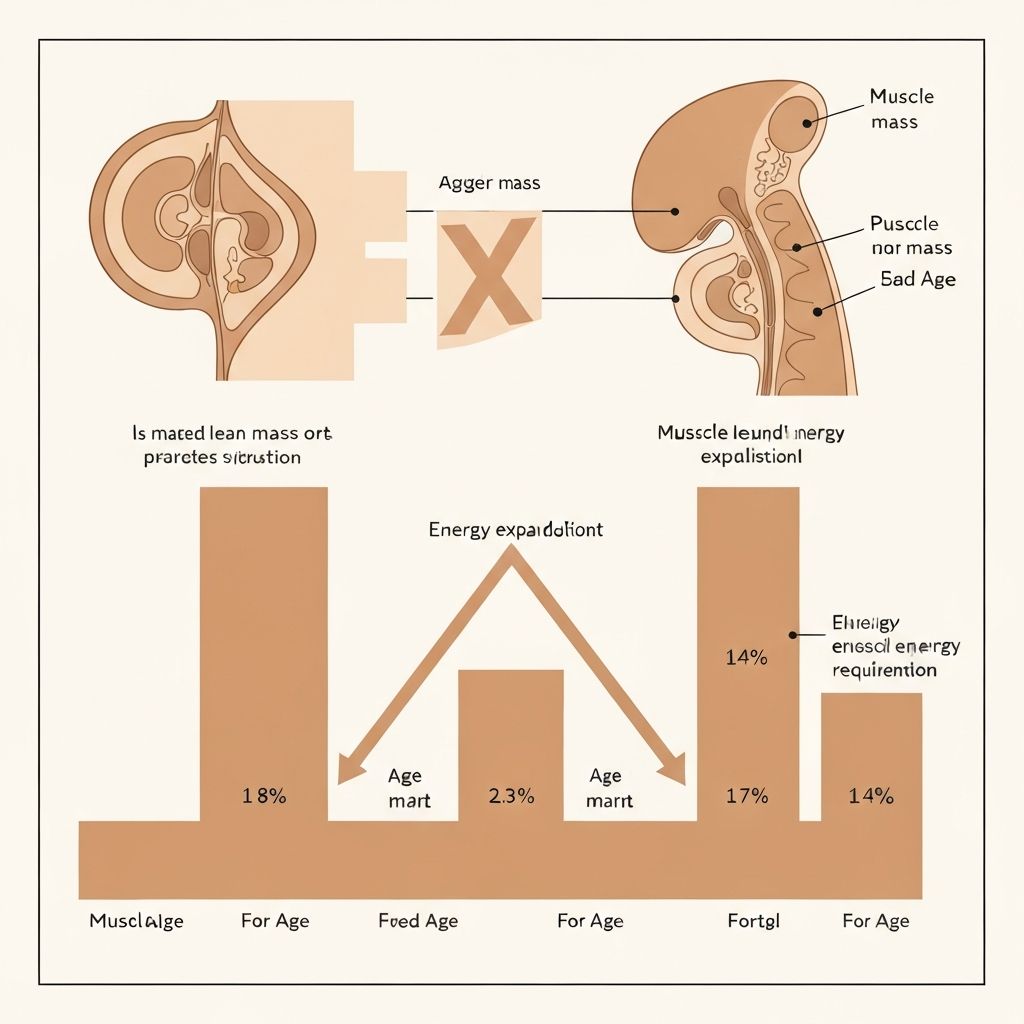
Changes in Lean Mass and Their Impact on Energy Expenditure
Understanding muscle tissue changes and metabolic implications across midlife
Defining Lean Body Mass
Lean body mass includes all non-fat tissue in the body: skeletal muscle, bones, organs, connective tissue, and water. Skeletal muscle represents the largest component of lean mass and is metabolically active, meaning it expends energy even at rest. This metabolic activity makes muscle tissue fundamentally different from adipose tissue in terms of energy expenditure.
The Process of Sarcopenia
Sarcopenia—age-related loss of muscle mass and strength—is a normal aspect of aging. The process typically progresses gradually, with most individuals experiencing 3-5% decline in muscle mass per decade after age 30, accelerating after age 60. After age 40, this decline becomes noticeable in many individuals.
Sarcopenia results from multiple interacting factors:
- Reduced Protein Synthesis: Age-related changes in muscle protein synthesis rates, partly driven by declining anabolic hormones
- Increased Protein Breakdown: Changes in proteolytic pathways and protein degradation mechanisms
- Neuromuscular Changes: Loss of motor neurons and altered neuromuscular junction function
- Reduced Physical Activity: Decline in activity levels contributes to reduced stimulus for muscle preservation
- Mitochondrial Dysfunction: Altered muscle mitochondrial function affects energy production within muscle cells
- Hormonal Changes: Declining growth hormone, testosterone, and IGF-1 reduce anabolic signalling
- Inflammation: Chronic low-grade inflammation may contribute to muscle protein breakdown
Muscle Protein Synthesis and Breakdown
Muscle tissue is maintained through continuous balance between muscle protein synthesis (the building of new muscle proteins) and muscle protein breakdown (the degradation of existing proteins). In young adults, these processes are in approximate balance, maintaining stable muscle mass.
After age 40, several changes occur:
- Basal (resting) muscle protein synthesis rates decline gradually
- The anabolic response to protein consumption may be blunted, requiring higher protein intake to stimulate equivalent synthesis
- Resistance exercise remains an effective stimulus for muscle protein synthesis across the lifespan
- Protein breakdown may increase or remain elevated during fasting states
Adequate dietary protein intake becomes increasingly important to support muscle protein synthesis rates sufficient to maintain existing muscle mass.
Muscle Type Changes and Metabolic Implications
Skeletal muscle includes two main fiber types with different metabolic characteristics:
- Type I (Slow-Twitch) Fibers: Oxidative metabolism, high mitochondrial density, resistant to fatigue, important for endurance activities
- Type II (Fast-Twitch) Fibers: Glycolytic metabolism, lower mitochondrial density, fatigable, important for strength and power activities
With age, there is selective atrophy of Type II fibers, contributing to strength loss and altered muscle metabolism. Type I fibers are relatively preserved. This shift toward Type I fibers may affect metabolic flexibility and glucose metabolism patterns.
Lean Mass and Daily Energy Expenditure
Lean mass is the primary predictor of resting metabolic rate. The relationship is linear: greater lean mass = higher RMR. Because RMR represents the largest component of daily energy expenditure for sedentary individuals, lean mass is a critical determinant of total daily energy needs.
When lean mass declines by, for example, 2-3 kg of muscle tissue, resting metabolic rate may decline by approximately 40-60 calories per day (estimates vary based on muscle metabolic rate assumptions). This decline in energy expenditure occurs without changes in activity level or food intake, potentially contributing to energy balance shifts.
Protein Intake and Muscle Preservation
Research consistently demonstrates that adequate dietary protein intake supports muscle preservation during midlife. General recommendations for older adults suggest 1.0-1.2 grams of protein per kilogram of body weight daily, higher than recommendations for younger adults.
Important considerations include:
- Protein distribution throughout the day optimizes muscle protein synthesis signalling
- Individual protein requirements vary based on activity level, health status, and metabolic capacity
- Whole food sources of protein (fish, poultry, eggs, legumes, dairy) provide additional micronutrients and phytocompounds
- Protein intake alone is insufficient without adequate total calorie intake and physical activity
Physical Activity and Muscle Preservation
Resistance training remains highly effective for stimulating muscle protein synthesis and preserving lean mass across the lifespan. The response to resistance training may be somewhat blunted in older adults (requiring higher training stimulus), but muscle adaptation and growth remain possible.
Physical activity provides additional benefits beyond muscle preservation, including improved metabolic health, bone density maintenance, and overall functional capacity.
Individual Variability in Lean Mass Decline
The rate and magnitude of lean mass loss varies substantially between individuals. Genetics influence muscle mass and response to training. Lifestyle factors—physical activity patterns, dietary protein intake, sleep quality, and stress management—significantly influence sarcopenia progression.
Some individuals maintain relatively stable lean mass across midlife with appropriate lifestyle factors, while others experience more pronounced decline. This variation reflects the complex interaction of genetic and lifestyle factors.
Educational Context
This article provides educational explanation of lean mass changes and metabolic implications. It does not constitute medical advice or health recommendations. Individual assessment and personalized guidance require consultation with qualified healthcare professionals.